Used · WWT
Reduced
20ft Shipping Containers
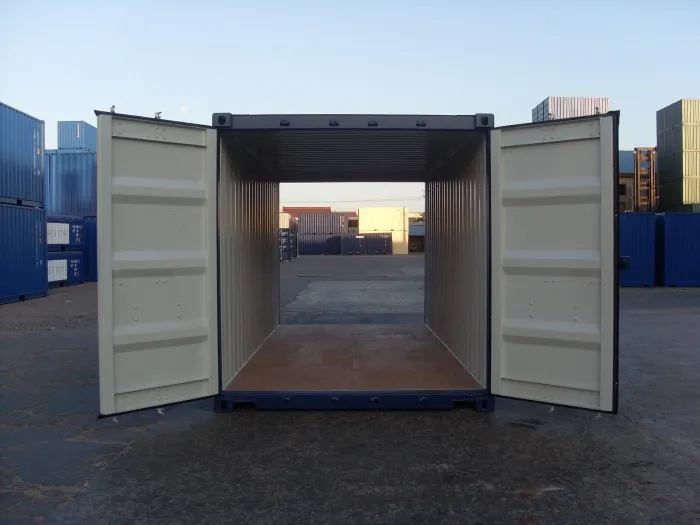
20ft Double Door Shipping Container (Used)
20ft32.90 m³
$2,450 $3,675AUD incl. GST

Guide
Tilt tray, side loader, Hiab, crane truck and semi trailer compared, plus AAD's delivery cost, lead times and what happens on the day your container lands.
Tilt tray: A straight run behind the placement point (typically about 2.5× the container length plus the truck), firm level ground and clear overhead height. The most common option for 6ft–20ft units: the tray tilts and the container slides off onto the ground.
Side loader: Clear space along one side of the truck for the stabiliser legs and the two lifting cranes, and room to park parallel to the drop. Lifts the container off the chassis and sets it down beside the vehicle; the usual choice for 20ft and 40ft units.
Hiab / crane truck: Firm ground for the outriggers and a placement point within the crane's reach. Suits sites where the unit has to go over a fence or into a corner a tilt tray cannot reach; reach depends on the crane model and the unit weight.
Illustrative only. Figures are typical; we confirm the vehicle and access with you before dispatch.
AAD Logistics delivers Australia-wide from the Port Macquarie. Every order follows the same path. We process it, book the right vehicle for the container size and your site, and a driver places the unit where you have prepared. This guide explains each vehicle, what it needs from the site, what delivery costs and how long it takes.
The short version: 6ft to 20ft containers go on a tilt tray. 40ft containers go on a side loader, Hiab, crane truck or semi trailer. The site decides which.
Prices are in AUD and include 10% GST. Delivery is charged per unit, so two containers to the same address are two charges unless quoted together as a multi-unit delivery.
A tilt tray truck carries the container on a flat deck that tilts and slides backward. The driver reverses to the final position, tilts the deck, and winches the container off so it slides onto the ground on its own rails. No crane is involved.
Tilt tray is the standard method for 6ft, 8ft, 10ft, 12ft and 20ft containers, including 20ft high cube, double door, open side and the container garages. It is the most economical vehicle and the one most drivers can supply anywhere in Australia.
Because the container lands in line with the truck, tilt tray is the least flexible about final position. If your spot is sideways to the only approach, a Hiab may be the answer.
A side loader is a semi trailer with two hydraulic cranes mounted along one side. The cranes lift the container off the trailer and set it down beside the truck. The container moves sideways, not backwards.
Side loader is the usual method for 40ft containers, including 40ft high cube, double door and open side. It also handles 20ft containers on sites where a tilt tray cannot make the straight run.
Side loader places the container within about a metre of the truck. It cannot reach over a fence or down a slope.
A Hiab is a truck with a folding crane behind the cab. A crane truck is the larger version with more reach and capacity. Both lift the container off the deck and place it at a distance from the truck, including over low obstacles.
Hiab and crane truck are the answer when the final position is not in line with the approach, when a fence or garden bed sits between truck and spot, or when the container has to go on a footing, a slab or a stack. Weight and reach limit what a given crane can do, so tell us the distance from where the truck can stand to where the container goes.
Hiab and crane deliveries are quoted rather than charged at the standard rate, because the vehicle and time on site vary with each job.
A flatbed or plain semi trailer carries the container but has no way to unload it. These are used when the site has its own forklift, crane or reach stacker, which is common in industrial yards and depots. If you have unloading equipment rated for the container’s tare, tell us and we can quote flatbed transport.
| Container | Usual vehicle | Alternative |
|---|---|---|
| 6ft, 8ft, 10ft, 12ft | Tilt tray | Hiab |
| 20ft, 20ft HC, DD, OS, garages | Tilt tray | Side loader or Hiab |
| 40ft, 40ft HC, DD, OS | Side loader | Crane truck or semi trailer with site unloading |
| Portable offices, cabins, ablution blocks, crib rooms | Tilt tray or Hiab, by unit | Crane truck |
The vehicle is chosen when we process your order, using the site access details you give at checkout and any photos you send. If the site changes the vehicle, we contact you before booking.
For the full site checklist, read preparing your site for container delivery. Council approval may be needed for placement on some properties, so check with your local council beforehand.
The standard service area is priced at AUD 745 per unit. Outside it, AAD delivers by quotation to regional Queensland, interstate and remote sites. Longer distances add transport time to the typical 4 to 7 business days, and remote sites may need a different vehicle from the one used in the city. Send the delivery address and a description of the site access and we will quote before you commit.
Browse the shipping container range or compare sizes in 10ft vs 20ft vs 40ft containers.
Related products
Ready when you are
Buy online and pay by bank transfer or card, or send us your site details and we will price the unit, the delivery and any modifications together.