Used · WWT
Reduced
20ft Shipping Containers
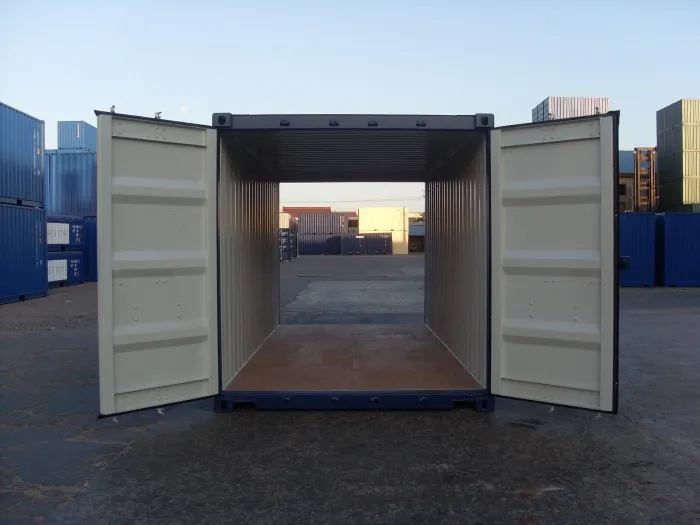
20ft Double Door Shipping Container (Used)
20ft32.90 m³
$2,450 $3,675AUD incl. GST

Guide
Wind and Watertight, Cargo Worthy and one-trip explained for Australian buyers, what a CSC plate is, and why AAD's used containers are sold as WWT.
Every shipping container starts life as cargo equipment. Over years of service it collects dents, rust and repairs, and at some point a shipping line retires it. From then on the container is sold on, and buyers need a shorthand for its condition. That shorthand is the grade.
The grades you will see in Australia are one-trip (or new), Cargo Worthy (CW), Wind and Watertight (WWT) and as-is. Suppliers use the terms loosely, so this guide explains what each one should mean, what it guarantees and what it does not. AAD Logistics sells used containers as inspected Wind and Watertight. We say that plainly so you can decide whether that grade suits your job.
A one-trip container has made a single loaded voyage from the factory to its market. It is sold as new because that voyage is how the manufacturer moves the unit economically. Expect fresh paint, an unmarked floor and a current CSC plate. AAD’s new containers fall into this category and carry an 18-month warranty.
Cargo Worthy means a surveyor has inspected the container and certified it fit to carry cargo by sea. The survey checks structure, floor, doors, seals and the CSC plate. A CW unit can be loaded, sealed and put on a ship. It costs more than WWT because of the survey and because the unit must meet a structural standard, not just a weather standard.
Wind and Watertight means the container keeps weather out. Doors close and seal, and the roof, walls and floor have no holes. It has not been surveyed for sea transport and may have damage that a surveyor would fail, such as a bowed panel or a de-rated corner post. For storage on land, WWT is the grade that matters.
As-is means no guarantee of anything. Holes, rotten floors and jammed doors are all possible. AAD does not sell as-is containers.
| Wind and Watertight | Cargo Worthy | |
|---|---|---|
| Weatherproof | Yes | Yes |
| Surveyed for sea transport | No | Yes |
| Valid for shipping without further inspection | No | Yes, while the survey is current |
| Cosmetic condition | Dents, rust, markings and patches expected | Similar; the survey is structural, not cosmetic |
| Typical price | Lower | Higher |
| Best use | Storage, site sheds, workshops on land | Export, one-way freight, repeated transport |
| Sold by AAD | Yes, used 20ft, 40ft and 40ft HC | No |
Almost every used container bought in Australia is used for storage on land. The buyer wants a dry, lockable, tough box at a good price. A Cargo Worthy survey adds cost for a certificate that a storage buyer will never use. So AAD inspects each used unit for the things that matter on land and sells it as Wind and Watertight.
The inspection covers doors, seals, roof, walls, floor, corner castings and understructure. A unit passes if it is weatherproof, lockable and sound enough to lift and place. Cosmetic items are left as they are. See what to expect in new vs used shipping containers.
If you need a container for export, buy new. AAD’s new range carries current CSC plates and an 18-month warranty. Used AAD stock should not be presented to a shipping line without a fresh survey, and we do not arrange surveys.
CSC stands for the International Convention for Safe Containers. Every ISO container carries a metal CSC plate riveted to the left-hand door. The plate is the container’s passport for sea transport and tells you a lot even if you never ship the unit.
Date of manufacture is the most useful line for a used buyer. It gives you the age of the steel and a sense of how many years of salt air the unit has seen. Maximum gross weight confirms the rating if you plan to store heavy goods. On a 20ft that gives a payload of up to approximately 28,000 kg once you subtract the tare of approximately 2,200 kg.
Only for shipping. The examination date governs whether a container can be put on a ship without a new inspection. For a container that lives on a farm or in a yard, an expired date changes nothing. A missing plate matters more, because it can indicate the unit was de-rated or built outside the ISO system. AAD’s used containers carry their plates.
Whether you buy from AAD or elsewhere, these questions sort a fair listing from a vague one.
AAD Logistics sells three used sizes, each inspected and Wind and Watertight, each in a choice of RAL colours.
Delivery is AUD 745 per unit within the standard service area and is shown at checkout. Payment is by bank transfer or card. Read how container delivery works and browse used shipping containers.
Related products
Ready when you are
Buy online and pay by bank transfer or card, or send us your site details and we will price the unit, the delivery and any modifications together.